Zhang Laoxin International Trade
The properties and multi-field applications of menthol, combined with popular science on HPMC and K12 chemical raw materials.
Time : Jun 28, 2026
The properties and multi-field applications of menthol, combined with popular science on HPMC and K12 chemical raw materials.
With the increasing sophistication of formulations in the daily chemical and light industrial sectors, market demands for product feel, stability, and user experience continue to rise. Basic chemical raw materials that combine functionality and compatibility have become central to formulation optimization. Menthol, a classic cooling functional ingredient, combined with HPMC and K12, two commonly used additives, can significantly improve the texture, stability, and efficacy of daily chemical products. This combination is currently the mainstream approach in the formulation development of personal care and oral care products, adapting to the needs of large-scale production and diversified product iteration.
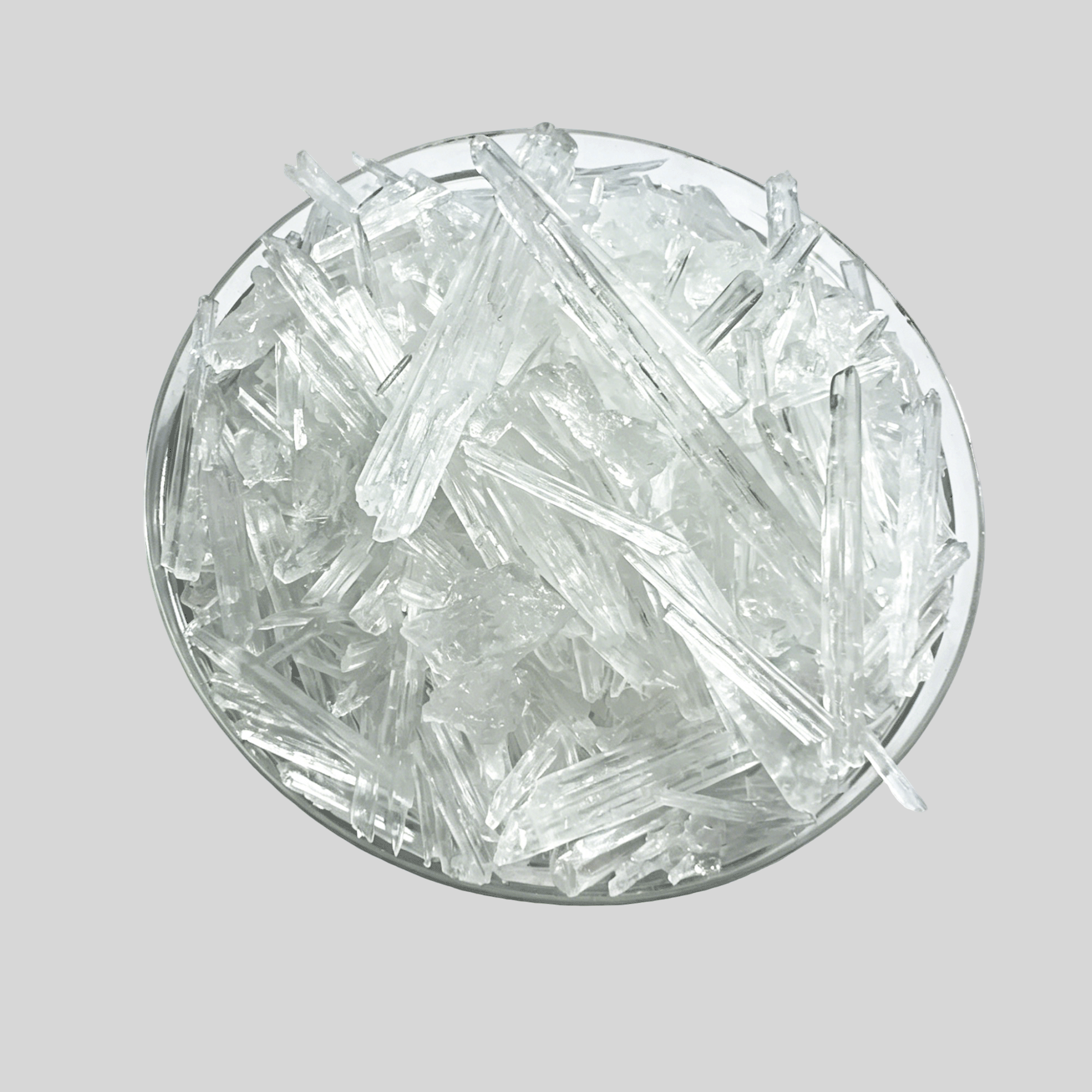
From a core physicochemical perspective, menthol is a natural terpenoid organic compound with excellent cooling, soothing, antibacterial, and deodorizing properties. It easily sublimes at room temperature, is slightly soluble in water, and readily soluble in organic solvents such as ethanol, making it a key source of the cooling sensation in daily chemical products. HPMC, or hydroxypropyl methylcellulose, is a nonionic cellulose ether whose core functions are thickening, rheology regulation, and suspension stabilization. It also exhibits strong acid-base compatibility and is non-irritating. K12, or sodium dodecyl sulfate, is a classic anionic surfactant, primarily known for its high-efficiency foaming, detergency, and emulsifying capabilities. The three components complement each other, making them suitable for most water-based daily chemical formulations.
At the production and formulation levels, the application of these three components follows a standardized process. In daily chemical production, K12 is typically used first as a surfactant to build a basic foaming and cleansing system. Then, HPMC is added to adjust the viscosity of the system, preventing the raw materials from separating and settling. Finally, menthol is added at a low temperature to avoid the problem of menthol sublimation and inactivation caused by high temperatures. The core factors affecting the quality of the finished product are concentrated in the ratio and processing temperature: excessive HPMC will make the product sticky and heavy, too high a concentration of K12 can easily cause dry and irritating skin, and processing temperatures exceeding 80℃ will directly destroy the effective components of menthol, reducing the product's cooling effect.
Supply chain and raw material selection are crucial for product quality control. When purchasing raw materials, daily chemical companies prioritize suppliers that meet purity standards and have strong batch stability. For example, menthol must be selected from high-purity food-grade products to eliminate skin irritation caused by impurities; HPMC requires attention to batch consistency in viscosity indicators to ensure uniform product texture; and K12 must be selected from refined grades with low residue and low irritation, suitable for the production of products for mothers, infants, and sensitive skin. A stable raw material traceability system can effectively reduce common industry risks such as formula mismatch failures and finished product quality inspection non-compliance.
The industry currently faces three major pain points: menthol alone has poor water solubility, and direct addition can easily lead to precipitation and uneven cooling sensation; K12 alone produces loose foam that is prone to defoaming, resulting in a poor product texture; and insufficient compatibility of HPMC can easily cause flocculation and stratification issues. However, scientifically combining these three ingredients can perfectly solve these problems. HPMC's suspending and stabilizing effect locks in the effective components of menthol, while K12's emulsifying effect enhances menthol's water solubility, resulting in a more balanced and stable formulation.
The application scenarios of this combination cover mainstream daily chemical categories. In the oral care field, toothpaste and mouthwash achieve a refreshing and deodorizing effect by adding menthol, while HPMC stabilizes the paste form and K12 optimizes the cleaning and foaming effect, enhancing the oral cleaning experience. In the shampoo and body care field, cooling shampoos and body washes rely on this combination to achieve scalp soothing, refreshing and oil-controlling effects, while ensuring fine and long-lasting foam. In the household cleaning field, cooling cleaners and air fresheners also utilize this combination of ingredients to achieve scent optimization and enhanced cleaning efficiency.
From an industry development perspective, daily chemical formulas are upgrading towards being gentler, more efficient, and more stable. In the future, the application rate of low-irritation refined K12, modified water-soluble menthol, and highly compatible HPMC will continue to increase. The precise compounding process of these three will become more mature, gradually replacing traditional single-raw-ingredient formulas and achieving widespread adoption in functional daily chemicals and light luxury personal care products.
Frequently Asked Questions (FAQ)
1. Will the combination of menthol, HPMC, and K12 cause ingredient conflicts? The three have good compatibility in physicochemical properties and no antagonistic reactions. They are a commonly used and safe combination in the daily chemical industry. As long as the reasonable ratio and processing temperature are controlled, they can be used in most water-based daily chemical products.
2. How to solve the problem of menthol precipitation in aqueous products? By adding an appropriate amount of K12 to exert emulsification and solubilization effects, combined with the suspension stabilization effect of HPMC, and using a low-temperature feeding process, the precipitation and stratification problems can be completely solved, ensuring a uniform product texture.
3. What are the standard addition ratios of core ingredients in a compound formulation? In standard daily chemical formulations, the addition amounts of menthol are 0.01%-0.1%, HPMC 0.2%-0.5%, and K12 1%-3%, which can be adjusted as needed according to the product category.
share


Previous Page: This is already the first page
Next page: It's the last page.
News Recommendations
 safety guidelines; Hydroxypropyl methylcellulose properties information.") Sodium lauryl sulfate (K12) safety guidelines; Hydroxypropyl methylcellulose properties information.Sodium lauryl sulfate (K12) safety guidelines; Hydroxypropyl methylcellulose properties information.With the continuous improvement of quality inspection standards and safety production systems in the fluorine chemical industry, standardized use of raw materials and adaptability to characteristics have become a core starting point for enterprises in mass production quality control.check the details
Sodium lauryl sulfate (K12) safety guidelines; Hydroxypropyl methylcellulose properties information.Sodium lauryl sulfate (K12) safety guidelines; Hydroxypropyl methylcellulose properties information.With the continuous improvement of quality inspection standards and safety production systems in the fluorine chemical industry, standardized use of raw materials and adaptability to characteristics have become a core starting point for enterprises in mass production quality control.check the details Differences between industrial and daily chemical applications of fine chemical raw materials HPMC, K12, and mentholDifferences between industrial and daily chemical applications of fine chemical raw materials HPMC, K12, and mentholThe grading of raw materials in the fine chemical industry is becoming increasingly refined. There are strict boundaries between industrial-grade and daily chemical-grade products of the same raw material in terms of purity, impurity index, and application scenarios.check the details
 Popular Science about Daily Chemical Raw Materials: The Cooling Principle of Menthol and the Foaming Mechanism of K12Popular Science about Daily Chemical Raw Materials: The Cooling Principle of Menthol and the Foaming Mechanism of K12The daily chemical industry is currently undergoing continuous upgrading of its product categories, with cooling oral care and oil-controlling and soothing shampoo and conditioner products becoming the mainstream in the market. Consumers are increasingly demanding a cooling texture, foaming experience, and gentleness from these products.check the details


Chat Online